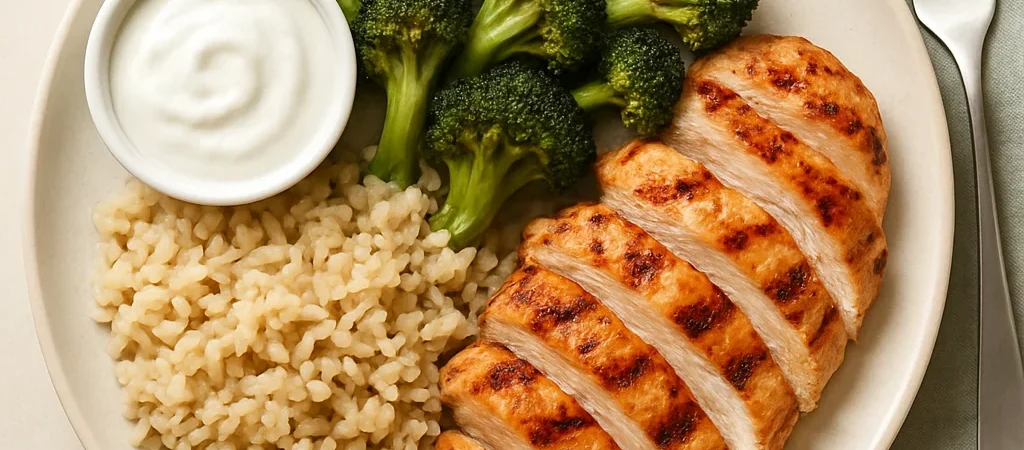
At 6 p.m., deciding what counts as a “good” dinner can feel harder than cooking it. A simple plate framework gives you a starting point: include vegetables or fruit, a source of protein, and a satisfying carbohydrate, then adjust for your preferences and hunger.
Start with a flexible template
For many meals, try filling about half your plate with vegetables or fruit, then making room for protein and a carbohydrate such as potatoes, rice, beans, or whole-grain bread. That’s a visual guide, not a rule you have to follow at every meal. A drizzle of olive oil, avocado, nuts, or a flavorful sauce can make the meal more satisfying, too.
Make familiar meals work
You don’t need a separate “diet dinner.” Add a bagged salad or roasted frozen vegetables beside a turkey sandwich, or serve chili with fruit and a piece of cornbread. If you’re making pasta, stir in spinach or broccoli and include a protein such as white beans, chicken, or tofu.
Notice what keeps you satisfied
Use the framework as a way to observe, not judge: do you feel comfortably full, and does the meal carry you through to your next planned eating occasion? If you’re hungry soon after dinner, consider whether you need a larger portion or more protein, fiber, or fat. The most useful plate is one you can build with foods you enjoy and can get regularly.